Foundations for Wellbeing: Free animated guides for pupils
Animated how-to guides for pupils on slow breathing and muscle relaxation.
In research published in Developmental Psychobiology, a peer-reviewed journal, Stanford University researchers reported that when they showed a brief animated guide to slow breathing to 5- to 12-year-old children in naturalistic settings, such as playgrounds and museums, it led to significant reductions in their biomarkers of stress. The animated guide used calming visualisations to scaffold and support children to take several slow breaths over the course of 60 seconds.
At the PSHE Association, we believe that children and young people should be entitled to learn strategies that can help them to manage their emotions and progress towards achievingpersonally meaningful, self-endorsed goals.
Slow breathing and progressive muscle relaxation are two of many strategies that they may find useful in helping them to do this. And we've produced two aminated guides — as part of our Foundations for Wellbeing mental health and wellbeing curriculum — to help introduce them to pupils.
Sign in or sign up for a free account below to access the animations.
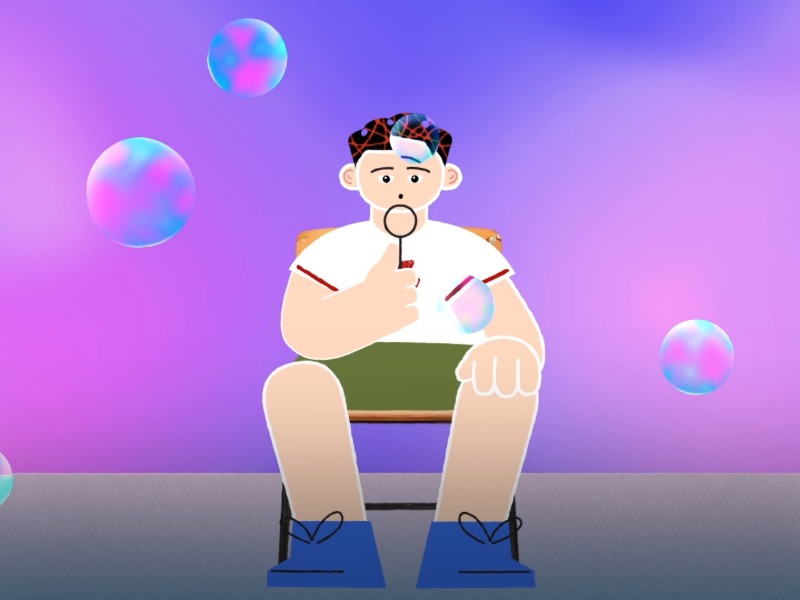
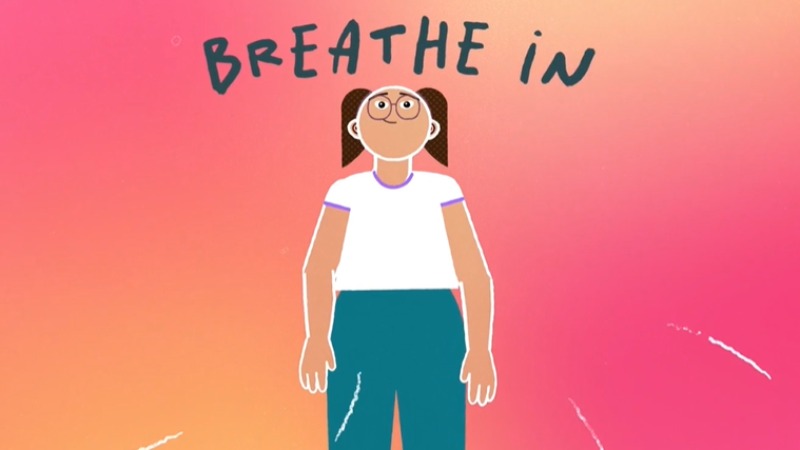
Teachers, parents, carers and other adults can use this animated guide to introduce primary school children to slow breathing. In the guide, children are encouraged to breathe in slowly as though smelling a flower, and to breathe out slowly as though gently blowing soft bubbles. We’ve designed the visualisations to be calming and to help children remember how to use slow breathing to manage their emotions across a range of situations.
The guide can also be shared with secondary school students, who can use it outside of classroom settings if they wish to.
Older children can be introduced to a variation of slow breathing that involves extending the outbreath slightly (e.g., by breathing in to a count of four and out to a count of five) — helping to slow the heartrate and activate the parasympathetic nervous system more efficiently.
This animated guide to muscle relaxation builds on the animated guide to slow breathing, and encourages primary school children to gently tense and release different muscle groups, one at a time.
Contrary to common misconceptions, progressive muscle relaxation can also be used in public, as it can be practised subtly, without others noticing.
Like slow breathing, progressive muscle relaxation can help us to relax and release tension that can naturally build over the course of the day, especially when we’ve had to negotiate several challenging or frustrating tasks.
Primary school children may find progressive muscle relaxation especially helpful towards the end of the school day, after doing challenging or frustrating schoolwork, or after breaktime (when a lot of energy may have built up). Secondary school students might find helpful after returning home from school or doing difficult homework.
Research conducted in England, and funded by the Department for Education, has found that leading brief (~5-minute) relaxation techniques regularly and consistently can support primary school children’s mental health and wellbeing byreducing emotional difficulties. These can therefore sit alongside and complement dedicated and contextualised learning about emotions that takes place during PSHE education.
This page content is for registered users only
Create a free account to:
Access free PSHE Association resources and guidance
Get regular updates on the latest PSHE education news and views, directly to your inbox